

There are few things more annoying than putting on your glasses and realizing one arm has suddenly become floppy. Every time you open or close them, the hinge wiggles, the frame sits unevenly, and you start wondering whether your glasses are going to fall apart at the worst possible moment.
The good news? A loose hinge doesn’t always mean an immediate trip to the optician. If the screw is still there, the problem may be a simple one. And if you genuinely have no screwdriver nearby, there are a couple of temporary ways to stabilize the glasses until you can get the proper repair.
Here’s how to handle the situation without turning a tiny loose screw into a broken frame.
First, Find Out What’s Actually Loose
Before trying any quick fix, gently move each temple arm where it connects to the front of the frame.
If the arm moves side-to-side and you can see the tiny hinge screw sitting slightly higher than usual, the screw may simply have backed out.
If the screw is completely missing, you’re dealing with a different problem.
And if the lens itself is loose, the frame is cracked, or the hinge looks bent, don’t try to force it back into place. Those problems are better handled by an optician.
The 5-Minute No-Tool Emergency Fix
If the screw has completely fallen out and you need your glasses to stay together temporarily, look for something thin and rigid that can pass through the hinge holes.
A small wooden toothpick can sometimes work as a short-term pin. Carefully align the hinge barrels and insert the toothpick through the opening where the screw normally sits. Don’t force it, and don’t use a thick piece that could split the hinge.
Once the hinge is stabilized, trim or snap the excess so it doesn’t stick out and scratch your skin.
This is strictly an emergency solution. A toothpick isn’t a replacement for a proper eyeglass screw, and it can work loose with repeated opening and closing.
What If the Screw Is Still There?
This is where the proper tool really matters.
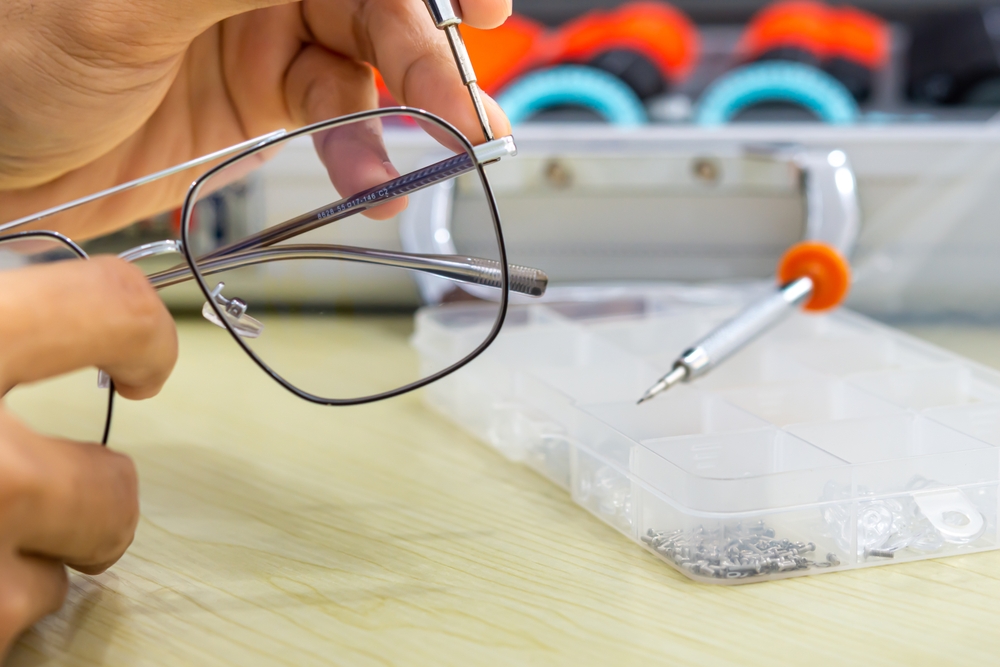
If the screw is still sitting in the hinge but is loose, the safest permanent solution is a precision eyeglass screwdriver. Lay the glasses on a soft cloth, hold the frame steady, and turn the screw clockwise in tiny increments.
Stop as soon as the arm feels secure but still opens and closes smoothly.
Don’t keep tightening just because you can turn the screw further. Over-tightening can strip the tiny threads or make the hinge unnecessarily stiff.
Don’t Reach for These Household “Fixes”
When a tiny screw starts misbehaving, it’s tempting to get creative. Some common fixes can actually make things worse.
Skip the superglue. It can seep into the hinge, stick moving parts together and potentially damage the frame or lenses.
Don’t use a kitchen knife. It may seem like the perfect substitute for a flat-head screwdriver, but it can slip easily and scratch the frame or your hand.
Don’t use excessive force. Tiny eyeglass screws don’t need much pressure, and forcing one can damage the screw head or surrounding frame.
Don’t bend the frame to compensate. If the glasses are crooked rather than simply loose, bending them without knowing the frame material can cause cracking or alignment problems.
A Better Fix You Can Do Later
Once you’re able to get the right tool, buy a small eyeglass repair kit and keep it somewhere convenient. These kits typically include a precision screwdriver and assorted replacement screws, making them useful for those annoying little emergencies.
To tighten a normal hinge screw:
- Place the glasses on a soft microfiber cloth.
- Find the loose hinge screw.
- Use the screwdriver that properly fits the screw head.
- Turn clockwise in small movements.
- Stop when the hinge is secure but still moves freely.
- Open and close the arm a few times to check its movement.
The goal isn’t to make the hinge as tight as possible. The goal is a secure hinge that still moves naturally.
What If the Screw Keeps Coming Loose?
If you’ve tightened the screw several times and it keeps backing out, don’t simply keep cranking it tighter.
The screw or hinge threads may be worn, or the hinge itself may need attention. An optician can replace the screw or repair the hinge properly.
Some professional eyewear repairs use thread-retaining methods or specialized replacement screws, but those are better handled with the appropriate parts and tools rather than experimenting with household adhesives.
When It’s Time to Stop the DIY Experiment
A loose screw is one thing. A damaged frame is another.
Get your glasses checked professionally if:
- the screw spins without becoming tighter
- the screw head is stripped
- the hinge is bent or damaged
- the frame is cracked
- the lens is loose or moving
- one side of the glasses suddenly sits much higher than the other
- the arm won’t open or close normally
A loose lens or damaged frame near your eye isn’t worth risking just to save a quick trip to the optician.
The Bottom Line
If you have no tools and the screw has fallen out, a carefully fitted toothpick can serve as a very short-term emergency pin. If the screw is still present but loose, however, there’s no truly reliable no-tool method for tightening it.
For the proper fix, a tiny precision eyeglass screwdriver is the way to go. It’s inexpensive, takes seconds to use, and is much safer for your frames than improvising with knives, glue or excessive force.
And once you’ve fixed that wobbly arm, give both hinges a quick check. Catching a loose screw early can save you from discovering your glasses have fallen apart at the exact moment you need them most.