

The gutter rusting away in your backyard deserves a second life.
That is usually how this DIY project starts. You replace your gutters and, instead of hauling them to the scrap pile, you wonder if they could grow plants. They can, and the whole thing takes about a day, a few basic tools, and a few bucks.
Gather these:
- Old or new rain gutters
- End caps, if the gutters do not already have them
- Silicone caulk or gutter sealant
- Drill with a small bit
- Hanging brackets or gutter brackets
- Screws or wall anchors
- Potting soil
- Seeds or small seedlings
- Landscape fabric or coffee filters
Step 1: Clean and Seal
Start with a bucket of soapy water. Years of dirt, leaves, and rust need to come off before anything else happens, so scrub the gutter down, rinse it thoroughly, and let it dry in the sun. Once it is dry, cap off both ends and run a bead of sealant along every seam.
Step 2: Drill and Line
Flip the gutter over and drill small holes every 4 to 6 inches along the bottom. Without them, water pools inside and roots rot within days. If you want to slow down how quickly water washes out through those holes, lay a strip of landscape fabric or a few coffee filters along the bottom before adding soil.
Step 3: Fill and Plant
Add a good-quality potting mix, leaving a little room below the rim so that water does not spill over the edge. Then tuck in seedlings or scatter seeds if you are starting from scratch, spacing them according to what you have chosen to grow.
Step 4: Mount and Water
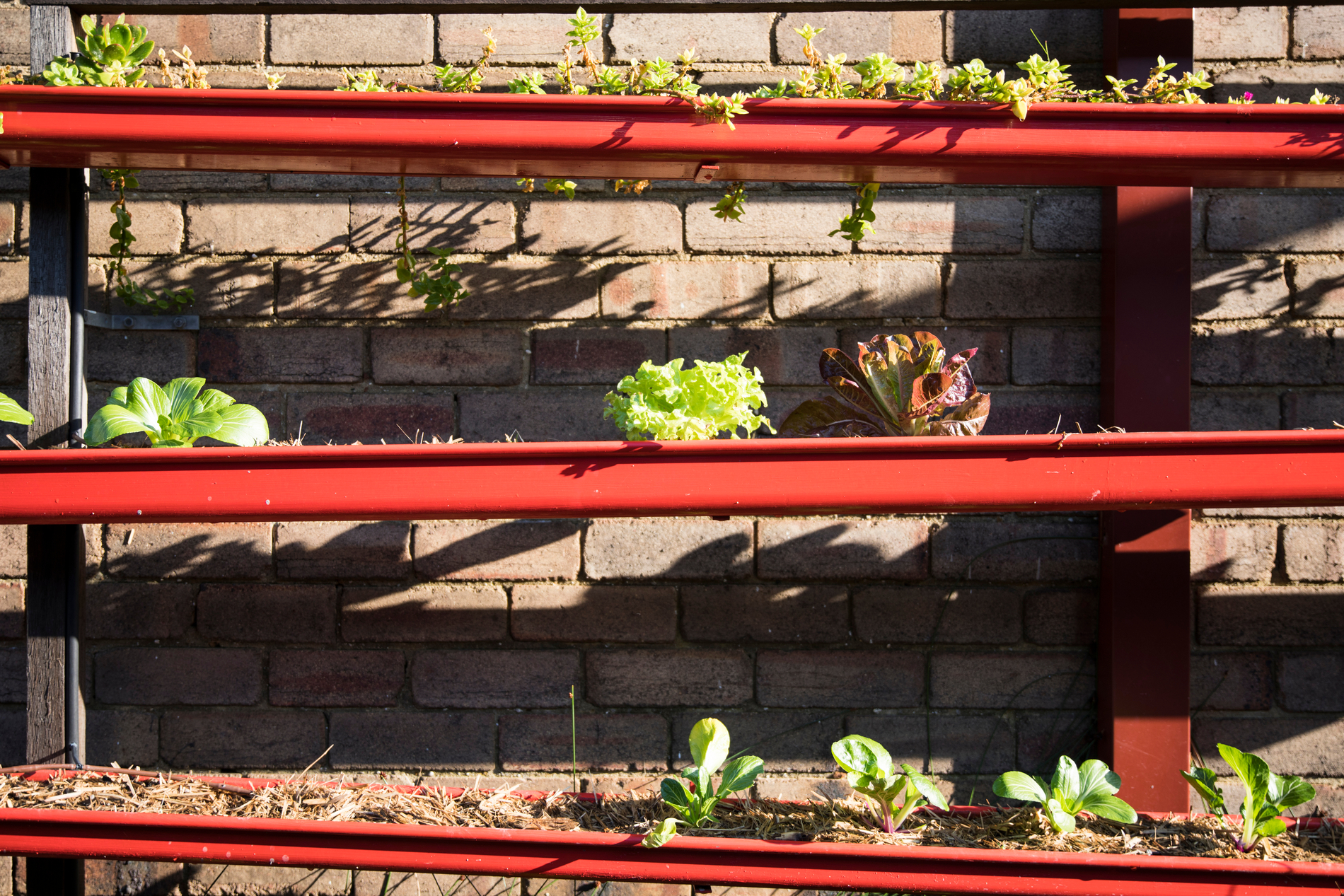
Screw brackets into a fence, wall, or railing, then secure the gutter in place. If you have more than one, stack them in rows a foot or so apart so the plants lower down still get their share of sunlight. Water the soil, then check it daily for the first week as the roots settle in.
What to Plant
Shallow-rooted plants do best here, since the gutter only holds a few inches of soil.
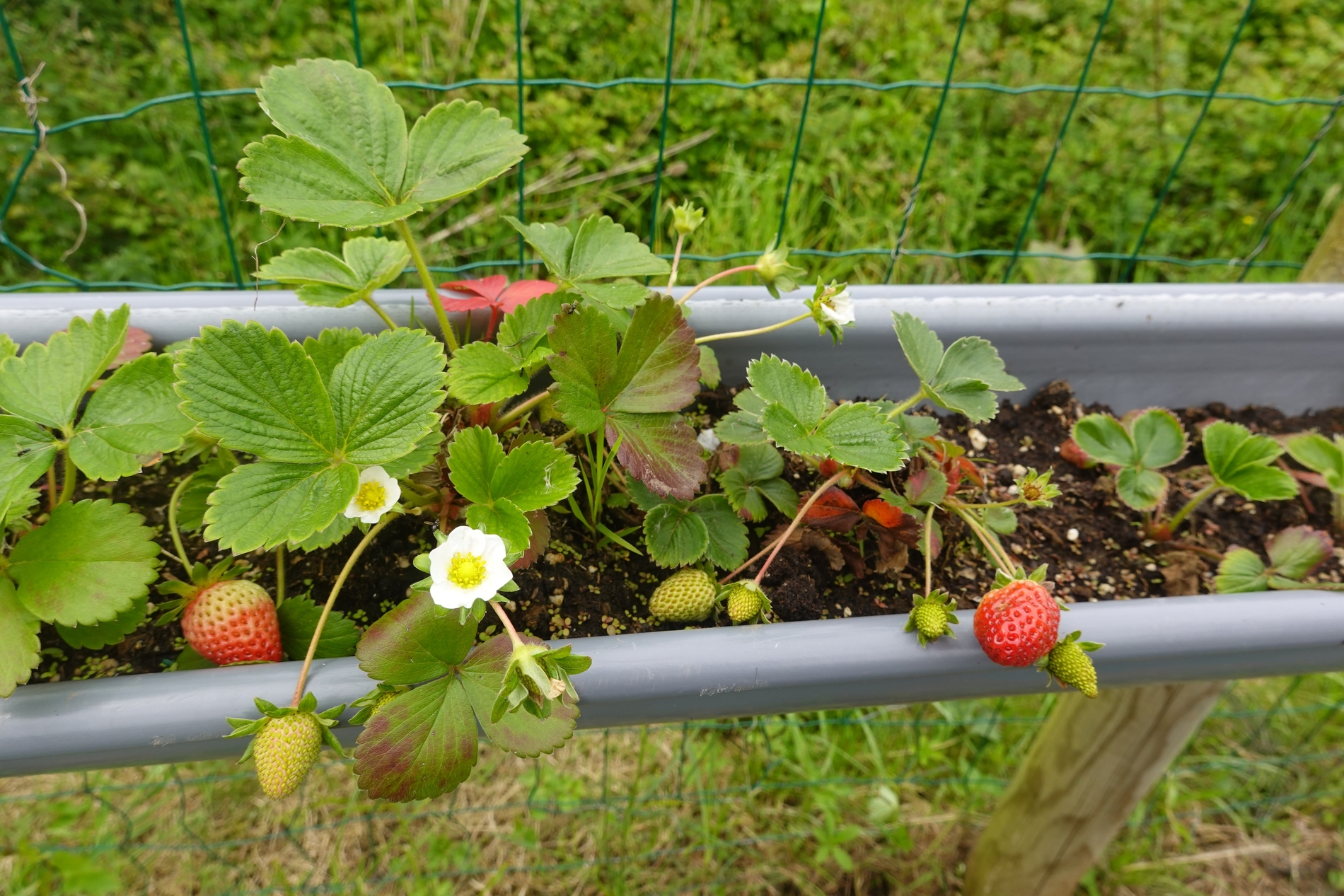
- Strawberries
- Lettuce and other leafy greens
- Herbs like basil, thyme, and parsley
- Succulents
- Bok choy and other small greens
Skip anything that needs real depth, like carrots or tomatoes. They will only end up stunted in a space this shallow.
Worth Knowing
- Pick a spot that gets 4 to 6 hours of sunlight a day.
- Gutters dry out faster than regular pots, so check soil moisture often.
- Seal or repaint metal gutters if they will stay outside all year, since bare metal rusts fast.
By late afternoon, what used to be scrap metal is holding living plants, mounted somewhere it can catch the sun. It costs next to nothing, takes one day from start to finish, and turns something you were about to throw away into one of the more useful things in your garden.