


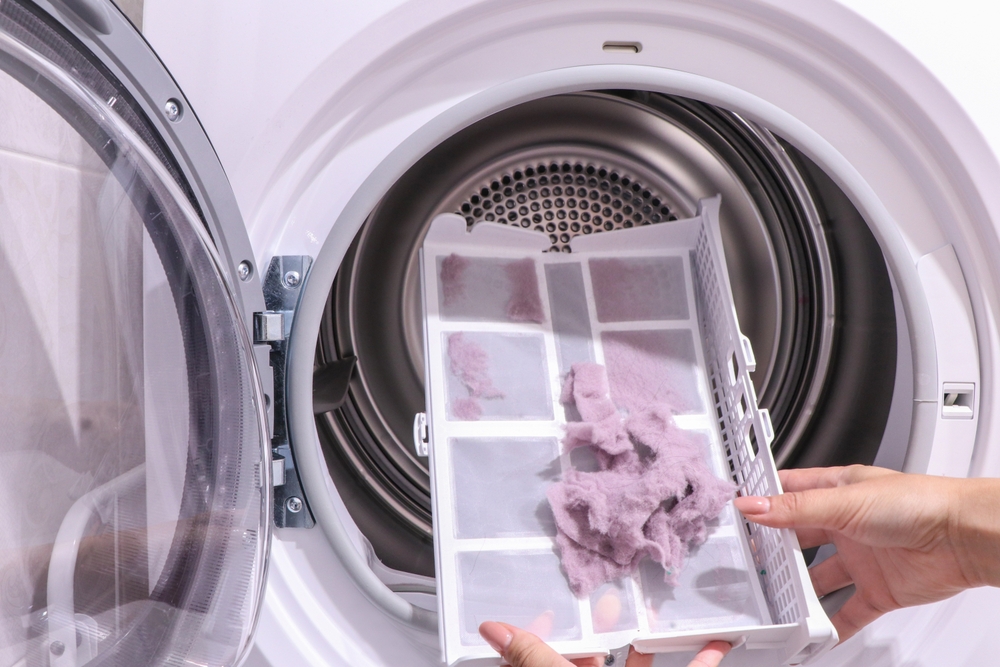
Ever pulled a “clean” shirt out of the wash and found it dotted with little gray fuzz balls? Or noticed your machine smells a bit like a damp basement? Lint is probably the culprit, and the good news is you can deal with it in about five minutes, no tools or special products required.
Why Lint Builds Up in the First Place
Every wash cycle shakes tiny fibers loose from your clothes, towels, and bedding. Most of it gets flushed away with the water, but some gets trapped in filters, hoses, and the nooks around the drum. Over time that buildup can cause:
- Fuzzy residue clinging to dark clothes
- Musty or sour odors
- Slow draining
- Extra strain on the pump (which means a pricier repair down the road)
Lint also traps moisture, which gives mildew a cozy place to grow. A quick regular cleanup keeps everything fresh and running well.
What You’ll Need
Nothing fancy. Grab:
- A dry towel or two
- A small container or old baking dish (to catch water)
- An old toothbrush
- A microfiber cloth or sponge
- White vinegar (optional, for a deeper refresh)
The 5-Minute Lint Cleanup
Minute 1: Check the lint filter or trap
Many machines have a built-in lint filter. In top loaders, it’s often a mesh pouch or a removable basket near the agitator or along the tub wall. Pop it out, peel off the fuzz, and rinse it under warm water. If it’s mesh, a quick scrub with the toothbrush clears stubborn bits.
Not sure if yours has one? Check your manual. Some newer machines skip the filter entirely and rely on a pump filter instead (see below).
Minute 2: Wipe the drum and the rubber door seal
If you have a front loader, the rubber gasket around the door is a lint magnet. Gently pull back the folds and wipe with a damp cloth. You’ll probably find hair, fuzz, and a bit of gunk hiding in there. Wipe until the cloth comes away clean.
For top loaders, run the cloth around the rim of the drum and under the lid.
Minute 3: Clear the detergent drawer and dispenser area
Slide the drawer out (most pull out with a gentle tug, and some have a release tab). Rinse it under warm water and use the toothbrush on any residue. Wipe the empty slot too, since lint and soap scum collect there.
Minute 4: Check the drain pump filter (every few months)
This one isn’t a weekly job, but it’s the lint hotspot most people forget. On many front loaders, it sits behind a small panel at the bottom front. Put your towel and container down first, since a little water will come out. Unscrew the filter, pull out any lint, coins, or lost socks, rinse it, and screw it back in snugly.
Check your user manual for the exact location, as this varies by brand and model.
Minute 5: Run a quick rinse
Close everything up and run a short, hot rinse cycle with the drum empty. For a bonus freshen-up, add about a cup of white vinegar to the drum. This helps loosen leftover residue and cuts odors.
Then wipe down the door and leave it ajar so the inside can dry.
Tips to Keep Lint From Coming Back
- Don’t overload the machine. Cramped clothes rub together more and shed more fibers.
- Separate lint-makers from lint-grabbers. Towels and fleece shed a lot, so don’t wash them with dark synthetics.
- Use the right amount of detergent. Too much leaves residue that traps fuzz.
- Shake out and check pockets. Tissues are lint disasters in disguise.
- Leave the door open between washes. Dry machines grow far less mildew.
- Consider a lint-catching mesh bag or a filter attachment for the drain hose if your machine doesn’t have a built-in filter.
How Often Should You Do This?
- Lint filter or trap: every 1 to 2 weeks
- Door seal and drawer: once a month
- Drain pump filter: every 2 to 3 months
- Vinegar rinse cycle: once a month
A Quick Note on Microfibers
Fun fact: the lint your washer sheds includes tiny synthetic fibers that can end up in waterways. Washing full loads on cooler settings, using a laundry bag designed to trap microfibers, or adding an external filter can reduce what goes down the drain. It’s a small habit that’s good for your machine and for the planet.
Five minutes is all it takes to keep your washer cleaner, your laundry fresher, and your machine happier for years. Pick a day each month, set a reminder, and make it part of your routine. Your clothes will thank you.
Tip: always check your machine’s manual before cleaning, since models differ and some have specific care instructions.