


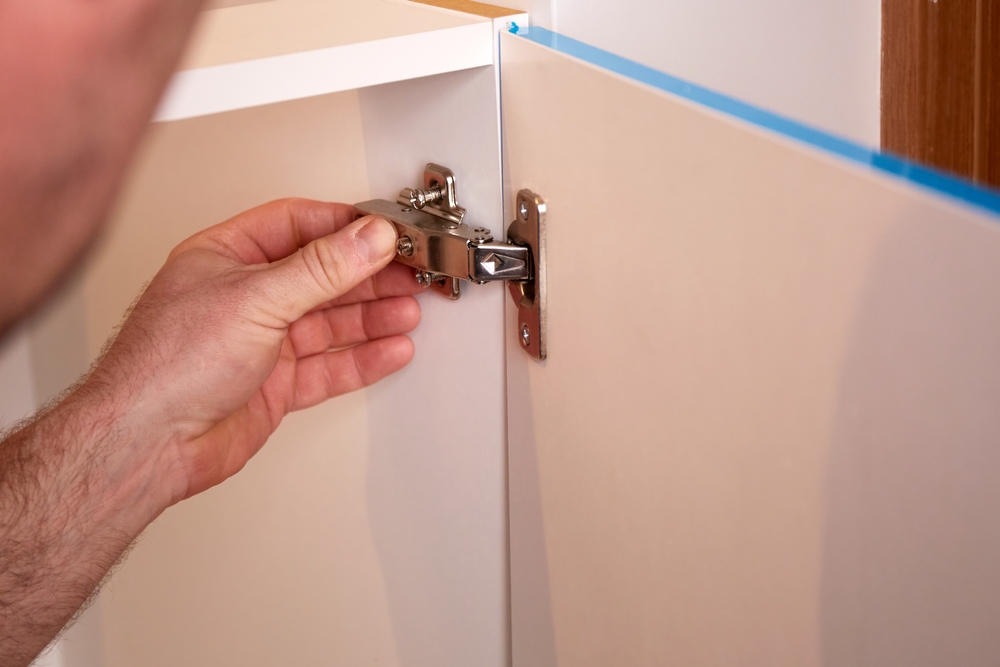
You know the door. It’s the one that swings a little crooked, doesn’t quite latch right, or wobbles every time you open it like it’s about to fall off entirely. Most people just live with it, assuming a wobbly cabinet door means a trip to the hardware store or a call to someone “handier” than them.
Here’s the surprising truth: the fix is probably already sitting in a drawer in your bathroom. A plain hair tie — yes, the kind you use for a ponytail — can solve this in about five minutes, no tools beyond a screwdriver required.
Why Cabinet Doors Get Wobbly in the First Place
Most wobbly cabinet doors have nothing to do with a broken hinge. The real culprit is usually the screw hole underneath it. Every time you open and close that door, the hinge screw shifts slightly in its hole. Over months or years of daily use, that constant motion gradually widens the hole in the wood. Eventually, the hole gets so worn out that the screw spins in place instead of biting into anything solid — which is exactly what makes the whole door feel loose and floppy.
This is especially common with cabinets made from particleboard or MDF, since those materials wear down faster than solid wood. But even sturdy cabinets aren’t immune after enough years of use.
Why a Hair Tie Actually Works
This trick uses the exact same logic as two classic carpenter tricks — stuffing a toothpick or a matchstick into a worn screw hole. The idea is simple: when a screw hole gets too big for the screw to grip, you add material to fill that gap back in. An elastic hair tie is flexible, holds its shape under pressure, and compresses just enough to wedge into the threads of the screw, giving it something to bite into again. It’s essentially a soft, stretchy shim that restores the tight fit the screw lost over time.
The 5-Minute Fix
What you’ll need:
- A plain elastic hair tie (the fabric-covered kind works especially well, but a rubber band works in a pinch)
- A screwdriver that matches your hinge screws
Steps:
- Remove the loose screw completely (30 seconds). Unscrew it the rest of the way and set the hinge aside so you can see the worn-out hole clearly.
- Loop the hair tie around the screw (1 minute). Wrap it snugly around the threaded part of the screw, a few times if needed, until it forms a slightly bulky coating. You want enough elastic there to fill the gap in the hole without making the screw impossible to turn.
- Guide the screw back into the hole (1–2 minutes). Line the hinge back up and start turning the screw in slowly. You’ll likely feel more resistance than usual — that’s the hair tie doing its job, compressing into the wood and giving the threads something to grip.
- Tighten it the rest of the way (1 minute). Keep turning until the screw sits snug and the hinge feels solid. Give the door a few test swings to check that the wobble is gone.
- Trim any stray elastic (optional, 30 seconds). If a bit of the hair tie is peeking out around the screw head, just snip it off with scissors so it stays hidden once the hinge is closed up.
When to Try Something a Bit Sturdier
This trick is genuinely great for everyday wobbliness, but if a hole is severely worn out — like the screw barely stays in at all — a slightly more permanent fix works better: dip a couple of wooden toothpicks in wood glue, pack them into the hole, snap off the excess, let the glue set for a few minutes, and then drive the screw back in. Same idea as the hair tie, just with a longer-lasting material.
A Quick Tip to Make It Last
Once your door is steady again, avoid overtightening the screw right away or down the road — over-tightening is actually one of the sneaky reasons holes strip out faster in the first place. A snug, secure fit is all you need; you don’t have to crank it down with all your strength.
Next time a cabinet door starts wobbling, skip the frustration and the hardware store trip. Grab a hair tie, a screwdriver, and five minutes, and you’ll have a door that swings smoothly again.