

A dull kitchen knife can make cooking feel like a chore. Instead of gliding through tomatoes, onions, or chicken, it crushes, slips, and requires extra effort. Surprisingly, dull knives are often more dangerous than sharp ones because they need more force, increasing the risk of slipping.
The good news? You don’t always need an expensive electric sharpener or a professional sharpening service. With a simple honing rod—or even a ceramic mug in a pinch—you can restore your knife’s edge in just five minutes and make meal prep much safer and easier.
Here’s how to do it the right way.
Why Your Knife Feels Dull
Before you start sharpening, it’s important to know the difference between a dull edge and a misaligned edge.
Every time you use a knife, the thin cutting edge bends slightly to one side. This doesn’t necessarily mean the blade has become blunt—it simply means the edge is no longer straight.
That’s where honing comes in. Honing realigns the edge, making the knife feel sharp again. True sharpening, on the other hand, removes a tiny amount of metal to create a brand-new edge.
For most home cooks, regular honing every week or two can keep knives performing well between sharpening sessions.
What You’ll Need
You only need one of these tools:
- A honing steel (the easiest and safest option)
- A ceramic honing rod
- The unglazed ring on the bottom of a ceramic mug (for emergencies)
Always work on a stable countertop with good lighting.
The 5-Minute Honing Trick
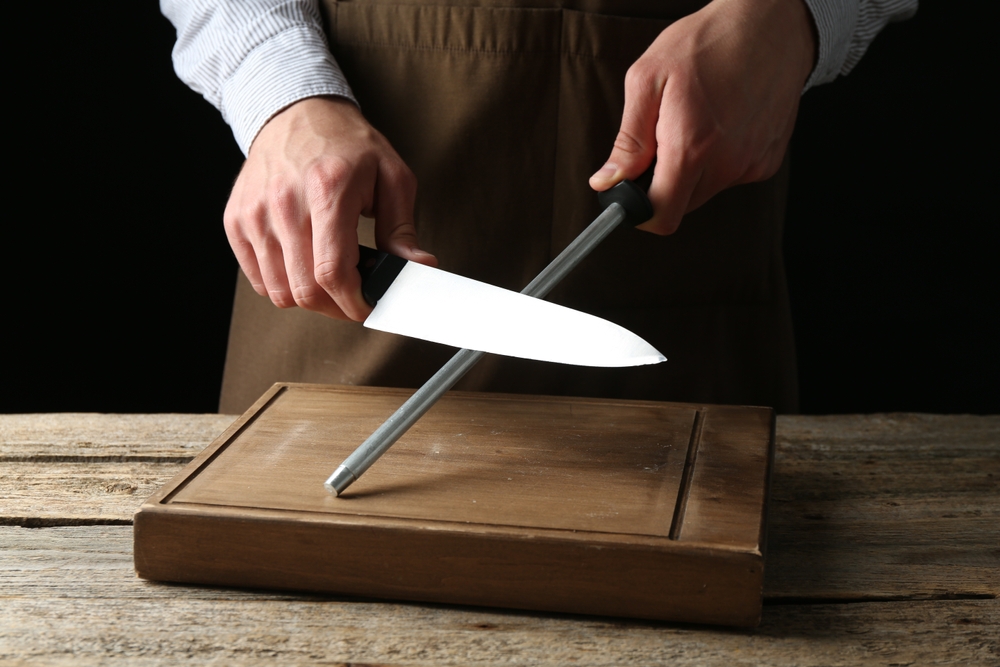
Step 1: Hold the Honing Rod Securely
Place the tip of the honing rod on a folded kitchen towel or cutting board to prevent slipping.
Grip the handle firmly with your non-dominant hand.
Step 2: Find the Right Angle
Most Western-style kitchen knives perform best at about a 20-degree angle, while many Japanese knives work better around 15 degrees.
Don’t worry about being perfect. A consistent angle matters more than an exact one.
Step 3: Glide the Blade
Starting at the heel of the knife, gently slide the blade down the rod while moving toward the tip.
Use light pressure rather than forcing the blade.
Repeat the motion on the opposite side.
Step 4: Alternate Sides
Complete 5 to 8 strokes on each side, alternating as you go.
Slow, controlled movements produce much better results than rushing through the process.
Step 5: Test the Edge
Try slicing a sheet of paper or a ripe tomato.
If the knife cuts cleanly with little resistance, you’ve successfully restored the edge.
If it still struggles, your knife may need full sharpening rather than honing.
No Honing Rod? Try a Ceramic Mug
Many ceramic coffee mugs have an unglazed ring on the bottom.
Turn the mug upside down on a towel and carefully run the knife across the rough ceramic surface at the same angle you would use on a honing rod.
Use light strokes and alternate both sides of the blade.
While this isn’t a replacement for proper sharpening tools, it can temporarily improve a dull edge until you have access to better equipment.
Common Mistakes to Avoid
Many people accidentally shorten the life of their knives by making a few simple mistakes:
- Pressing too hard while honing
- Using inconsistent angles
- Moving the blade too quickly
- Trying to sharpen heavily damaged or chipped knives with a honing rod
- Cutting on glass, marble, or ceramic surfaces instead of wooden or plastic cutting boards
Avoiding these habits helps your knives stay sharp much longer.
How Often Should You Sharpen?
For the average home cook:
- Hone your knives every 1–2 weeks.
- Sharpen them every 6–12 months, depending on how often they’re used.
- Professional cooks or frequent home chefs may need sharpening every few months.
If honing no longer restores the edge, it’s time for proper sharpening using a whetstone or professional sharpening service.
Keep Your Knives Sharper for Longer
A few simple habits can dramatically extend the life of your blades:
- Hand wash knives instead of putting them in the dishwasher.
- Dry them immediately after washing.
- Store them in a knife block, magnetic strip, or blade guards.
- Use wooden or plastic cutting boards instead of hard surfaces.
- Avoid scraping food off the cutting board with the blade’s edge.
These small changes reduce wear and help maintain a sharp cutting edge.
You don’t need fancy equipment or years of experience to improve your kitchen knives. Spending just five minutes with a honing rod can restore a tired edge, make food prep smoother, and improve kitchen safety.
Think of honing as routine maintenance rather than a repair. When you make it a regular habit, your knives stay sharper, last longer, and make every slice, chop, and dice feel effortless.