


You bought it fresh out of the box. It smelled like nothing — or maybe that faint “new fabric” scent that made you feel like you had your life together. Fast forward two weeks, and now it smells like a gym locker had a baby with a forgotten lunch bag. What happened?
Good news: you’re not doing anything unusually wrong, and you don’t need a $40 specialty cleaner or a trip to the dry cleaner to fix it. You need about five minutes, a few things already in your kitchen, and a little bit of sunlight.
Why Backpacks Go Bad So Fast
Backpacks are basically the perfect breeding ground for odor-causing bacteria, and it has nothing to do with how “clean” you are as a person. A few reasons this happens so quickly:
- They sit against your back. Sweat gets absorbed into the fabric and padding, especially in the panel that rests against your spine.
- They’re dark and often damp inside. Bacteria and mold love a warm, low-light, low-airflow environment — which describes the inside of most backpacks perfectly.
- Crumbs and spills happen. Even a few granola bar crumbs or a leaky water bottle cap can feed bacteria for days.
- They rarely get full air-drying time. Most bags go from your back, to a closet, to your back again — never really getting a chance to dry out completely.
None of this means your backpack is dirty in the way a floor is dirty. It just means it’s an enclosed fabric environment that traps moisture, and moisture plus organic residue equals smell.
The Actual 5-Minute Fix
Here’s the part you came for. This won’t replace a deep clean forever, but it will knock out that “week two” smell almost instantly and buy you a lot of time before your next full wash.
1. Empty it out and turn it inside out (or as close as you can get). Dump every pocket. Shake out crumbs, old receipts, and that mystery pen cap. If your bag has a main compartment you can flip, do it — you want air and baking soda to reach every surface.
2. Sprinkle in baking soda and let it sit. Baking soda is doing the real work here — it neutralizes odor molecules instead of just masking them. Sprinkle a generous layer into the main compartment and any smelly side pockets, then zip it (mostly) shut and let it sit for a few minutes while you do the next step.
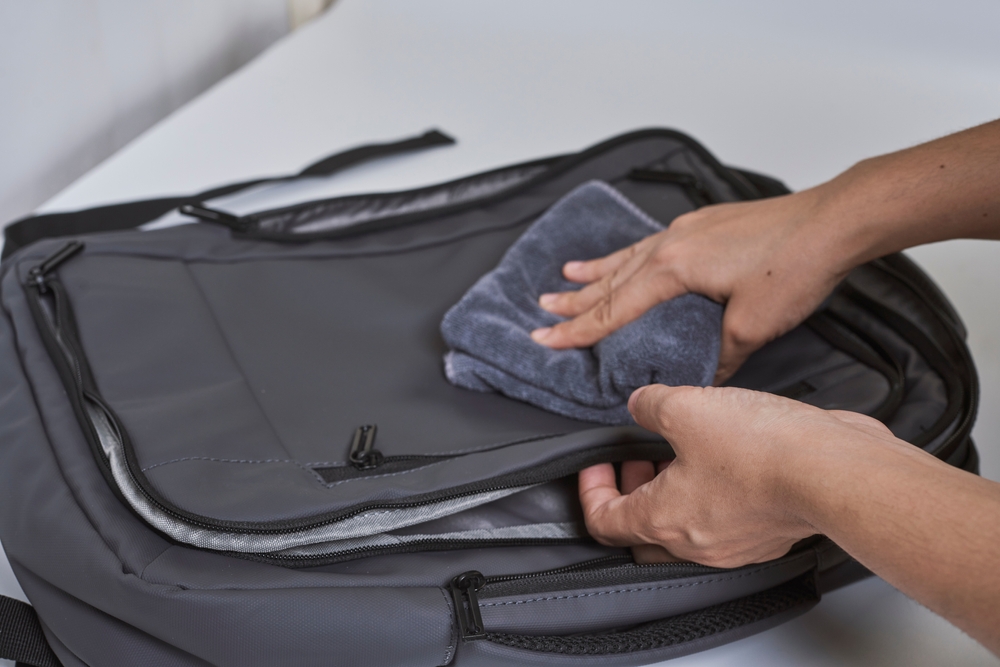
3. Wipe down the interior with a vinegar-water mix. Mix equal parts white vinegar and water in a spray bottle or on a damp cloth. Lightly mist or wipe the interior lining, seams, and especially the back panel padding. Vinegar kills the bacteria actually causing the smell, not just the symptom of it. Don’t worry about the vinegar smell lingering — it fades fast as it dries.
4. Shake out the baking soda and let it air out. Turn the bag over and give it a good shake to remove the baking soda (it will have absorbed a lot of the odor along with it). A quick vacuum with a hose attachment works even better if you have one handy.
5. Set it in sunlight or by an open window. This is the step most people skip — and it’s the one that matters most. UV light and fresh airflow are natural bacteria killers. Even 20–30 minutes in direct sun (while you finish your coffee) makes a noticeable difference. If sunlight isn’t available, a fan or open window works too.
That’s it. Five minutes of active effort, and the rest is just letting the bag sit and breathe.
Keeping It Fresh Between Fixes
A few small habits go a long way toward stretching the time between “week two smell attacks”:
- Let it air out overnight instead of stuffing it straight into a closed closet.
- Wipe up spills immediately rather than letting them dry into the fabric.
- Toss a dryer sheet or a small sachet of baking soda inside when it’s not in use.
- Empty food-related pockets daily, even if nothing looks spilled — crumbs hide well.
When You Need More Than the Quick Fix
If your backpack still smells musty after this treatment, it may be dealing with actual mold or mildew, especially if it’s been damp for a while (rainy commutes, a spilled water bottle that sat too long, gym clothes packed while still wet). In that case, check the care label — many fabric backpacks can be hand-washed or even machine-washed on a gentle cycle, while leather or structured bags usually need spot cleaning only.
The five-minute method above is meant to be your regular maintenance routine, done every week or two, so you rarely need the deep clean at all.
A smelly backpack isn’t a sign you need to buy a new one — it’s just a sign the bag needs a little airflow and a chemistry assist. Baking soda to absorb, vinegar to disinfect, sunlight to finish the job. Five minutes now saves you from that awkward “is that smell coming from my bag?” moment later.