
A kettle is one of those kitchen appliances we use almost every day but rarely think about cleaning until something looks off. If you’ve noticed white, chalky deposits inside your kettle, you’re probably dealing with limescale. These stubborn mineral marks can make your kettle look dirty, affect its heating efficiency, and leave tiny flakes floating in your hot water.
The good news? You don’t need expensive cleaning products, special equipment, or hours of scrubbing to tackle the problem. With just two simple ingredients, you can loosen everyday limescale in about five minutes of active cleaning time.
Here’s how to give your kettle a quick refresh using ingredients you may already have in your kitchen.
The Two Ingredients You’ll Need
The secret to this simple cleaning trick is combining white vinegar and water. White vinegar contains acetic acid, which helps dissolve the mineral deposits left behind by hard water.
Gather these two ingredients:
- White vinegar: ½ cup of regular distilled white vinegar.
- Water: ½ cup of fresh tap or filtered water.
You’ll also need a soft sponge or microfiber cloth for wiping the outside of the kettle, but no abrasive scrubbers are necessary.
How to Descale Your Kettle in 5 Minutes
This method is straightforward and requires very little effort. Follow these steps to loosen those chalky deposits.
1. Prepare the Cleaning Mixture
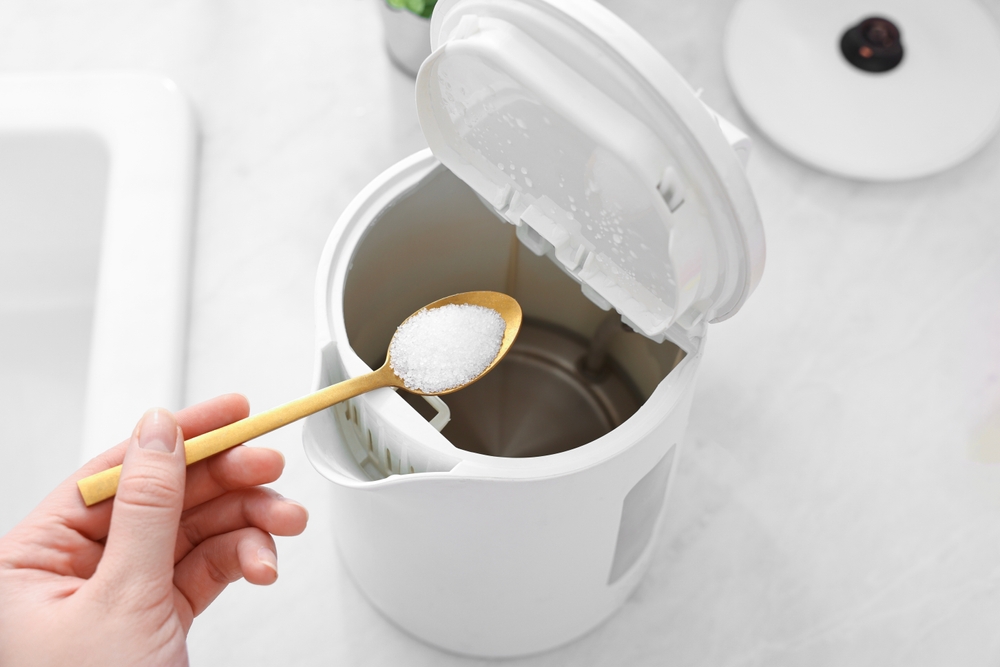
Start by making sure your kettle is unplugged and cool. Pour equal parts white vinegar and water into the kettle. Use enough liquid to cover the areas where limescale has collected, adjusting the quantities if you have a larger kettle.
2. Bring the Mixture to a Boil
Close the lid, switch on the kettle, and allow the vinegar-water mixture to boil. The heat helps the acid work against mineral buildup.
If your kettle has a particularly thick layer of limescale, allow the hot mixture to sit for another 10 to 15 minutes after boiling. This extra soaking time can help loosen stubborn deposits.
3. Empty the Kettle
Once the mixture has done its job, unplug the kettle if necessary and carefully pour the liquid away. Avoid splashing yourself with the hot solution.
You may notice that some white deposits have already disappeared or started flaking away.
4. Rinse Thoroughly
Rinse the kettle several times with fresh water to remove any remaining vinegar. If loose mineral flakes remain, gently wipe the interior with a soft, non-abrasive sponge.
Never immerse an electric kettle in water or scrub its heating element with metal tools.
5. Boil Fresh Water Before Using
Fill the kettle with clean water, bring it to a boil, and discard that water. Repeat if you can still smell vinegar.
Your kettle should now look noticeably cleaner and be ready for everyday use.
Why Does This Two-Ingredient Trick Work?
Limescale forms when minerals, especially calcium and magnesium, accumulate as water is heated and evaporates. This is particularly common in areas with hard water.
White vinegar contains acetic acid, which reacts with calcium carbonate, one of the main components of limescale. The reaction helps break down the chalky deposits, making them easier to rinse away.
Water dilutes the vinegar and provides enough liquid to reach the affected surfaces. Together, these ingredients offer an affordable alternative to many commercial kettle descalers.
How Often Should You Descale Your Kettle?
There’s no universal cleaning schedule because it depends on your water supply and how frequently you use your kettle.
As a general guide:
- Every 2–4 weeks: If you use your kettle frequently and live in a hard-water area.
- Every 1–2 months: If your water has moderate mineral content.
- Every few months: If you have relatively soft water and notice very little buildup.
Keep an eye out for white flakes, cloudy patches, or a chalky layer around the bottom of the kettle. These are signs that it’s time for a clean.
A Few Mistakes to Avoid When Cleaning Your Kettle
Even a simple cleaning method can go wrong if you rush through it. Keep these tips in mind:
- Don’t use undiluted vinegar unnecessarily: A diluted solution is generally sufficient for routine descaling.
- Avoid metal scrubbers: Steel wool and rough brushes can scratch the interior or damage protective surfaces.
- Don’t mix cleaning products: Never combine vinegar with bleach or other household cleaners.
- Don’t leave the kettle unattended: Stay nearby while the solution heats.
- Don’t skip rinsing: Lingering vinegar can affect the taste and smell of your next cup of tea or coffee.
- Check the manufacturer’s instructions: Some kettles have specific descaling recommendations, especially models with coated interiors or special filters.
Keep Your Kettle Cleaner for Longer
A little maintenance can prevent limescale from becoming a bigger cleaning project. Empty leftover water after use instead of allowing it to sit inside the kettle for days. If possible, use filtered water, particularly if your tap water contains high levels of minerals.
You can also give the kettle a quick visual check every week. Catching small deposits early makes them much easier to remove.
Enjoy a Fresher, Cleaner Kettle
You don’t need a complicated cleaning routine to keep your kettle in good shape. White vinegar and water can help dissolve everyday mineral buildup without expensive products or exhausting scrubbing sessions.
Although the five-minute method is quick, remember that boiling and soaking time may add a little extra time depending on how much limescale has accumulated. For stubborn deposits, simply allow the mixture to sit longer before rinsing.
The next time you spot those chalky white marks, reach for these two kitchen staples and give your kettle the refresh it deserves!