

A small house fire can turn deadly in about minutes.
Fire safety researchers at Underwriters Laboratories found that fires in modern homes filled with synthetic furniture and open floor plans burn several times faster than fires in homes built decades ago, when natural materials were standard.
Most home fire risks come from a short list of preventable problems, and you can fix nearly all of them in a single weekend—no contractor required.
Here are 7 DIY projects that take an hour or less each and meaningfully lower your risk.
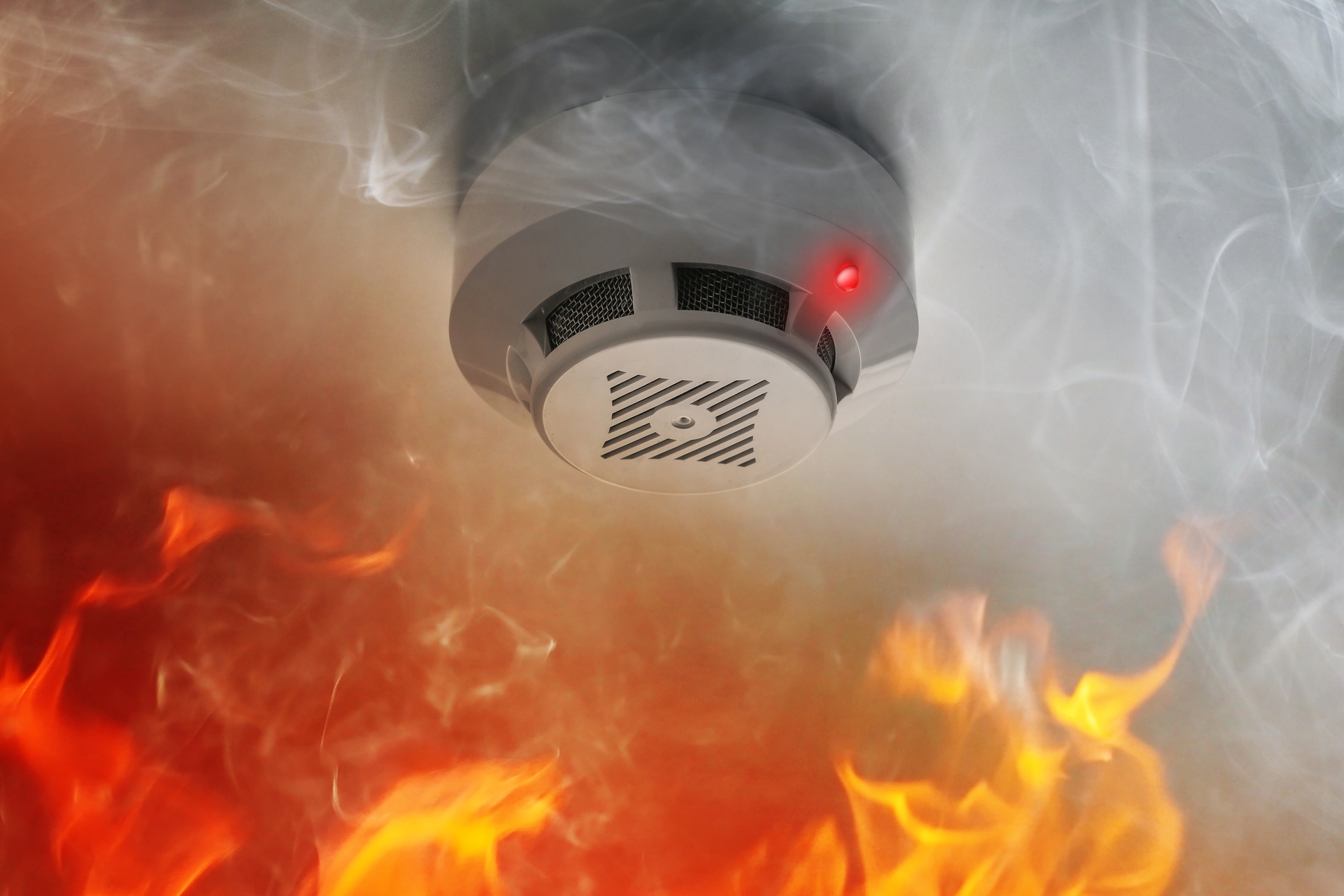
1. Test and Replace Your Smoke Alarms
Press the test button on every alarm in your home. If one does not sound right away, replace the battery first, then test again. Next, check the manufacture date printed on the back of each unit. Smoke alarms lose sensitivity as they age, so replace any alarm that is 10 years old or older, even if it still passes the test.
- Put an alarm inside every bedroom, outside each sleeping area, and on every level of the home.
- Choose interconnected alarms, so when one sounds, they all sound.
- Test every alarm monthly.
2. Get an ABC Fire Extinguisher and Learn to Use It
A multipurpose ABC extinguisher covers the three fire types most likely to start in a home. These include ordinary combustibles, flammable liquids, and electrical fires. Buy at least one for the kitchen area and one for the garage.
- Check the pressure gauge. The needle should sit in the green zone.
- Learn the PASS method: Pull the pin, Aim at the base of the fire, Squeeze the handle, Sweep side to side.
- Mount it somewhere visible and easy to reach, not buried behind other items in a closet.
3. Clean Your Dryer Lint Trap and Vent
Lint buildup is one of the leading causes of home dryer fires, and most of the risk sits inside the vent duct, not just the trap on top of the machine.
- Empty the lint trap before every load.
- This weekend, disconnect the dryer and vacuum out the vent duct and the exterior vent hood.
- If your duct is plastic or foil, replace it with rigid or semi-rigid metal duct, which holds up far better under heat.
4. Give Space Heaters Three Feet of Clearance
Space heaters cause a large share of home heating fires, and most of those start because something flammable was placed too close to the unit.
- Keep the heater at least three feet from furniture, bedding, curtains, and paper, on every side.
- Plug it directly into a wall outlet. Never use an extension cord or power strip.
- Turn it off and unplug it whenever you leave the room or go to sleep.
5. Inspect Cords and Outlets
Walk through your home and check every visible cord and outlet.
- Replace any cord that is cracked, frayed, or has exposed wire.
- Never run a cord under a rug, where damage stays hidden, and heat cannot escape.
- Avoid plugging several high-draw appliances into one outlet or power strip.
- Install outlet covers if young children are in the home.
6. Fire-Proof Your Kitchen
Cooking is the leading cause of home fires. A few habits and one key rule for grease fires cut that risk significantly.
- Never leave the stove unattended while something is cooking, especially frying.
- Keep towels, oven mitts, and paper away from burners.
- If a grease fire starts, do not use water. Slide a lid over the pan or pour on baking soda, then turn off the heat.
- Keep your ABC extinguisher within reach of the kitchen, though not stored right next to the stove.
7. Build and Practice a Home Escape Plan
Because a modern fire can spread through a home in minutes, a practiced plan matters as much as any device you own.
- Sketch a simple floor plan and mark two ways out of every room, including windows.
- Choose an outside meeting spot, such as a mailbox or a neighbor’s tree, a safe distance from the house.
- Practice the plan with everyone in the household, including once at night.
- Agree in advance that once everyone is out, nobody goes back inside for any reason.
Start This Weekend
None of these seven projects takes more than an hour, and several take fifteen minutes. Work through the list in order, room by room, and by Sunday evening your home will be measurably safer than it was on Friday.