

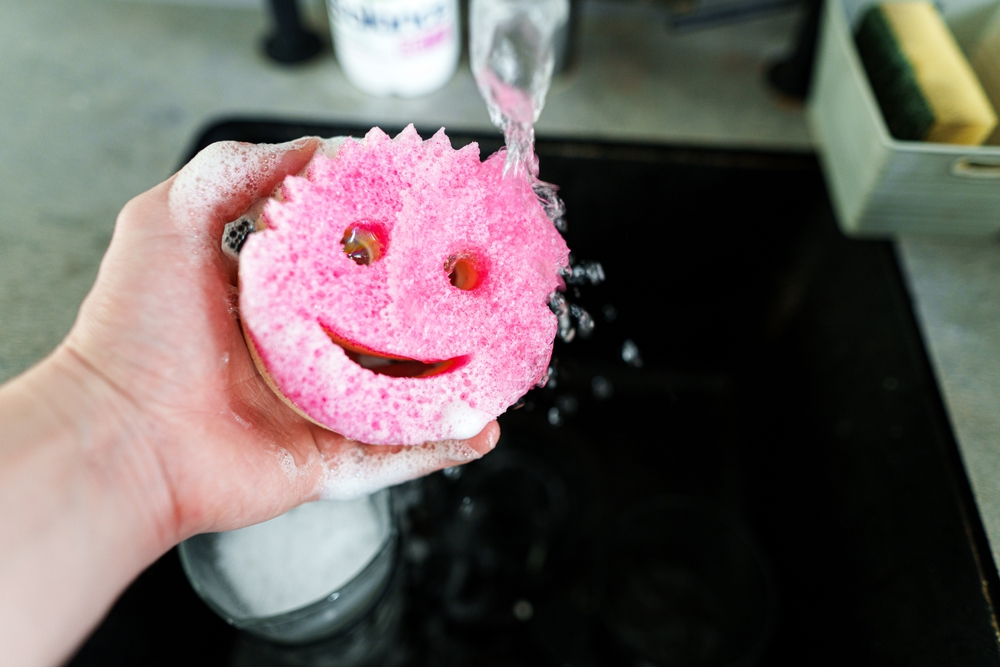
If you think your scrubbing sponge is only good for washing dishes, you’re missing out on one of the most versatile cleaning tools in your home. Sure, it’s great for tackling greasy pots and dirty plates, but this humble sponge has plenty of hidden talents that can save you time, effort, and even money.
Many modern scrubbing sponges are designed to become firm in cold water for tougher scrubbing and softer in warm water for gentler cleaning. That simple feature makes them useful for far more than your kitchen sink.
Here are some clever ways to put your scrubbing sponge to work around the house.
1. Gently Remove Dirt and Skin from Root Vegetables
Prepping potatoes, carrots, or other root vegetables doesn’t always require a vegetable peeler. Wet your sponge with cold water so it becomes firmer, then scrub the vegetables under running water.
The textured surface helps remove dirt while gently rubbing away thin skins, leaving more of the vegetable intact compared to aggressive peeling. It’s a quick trick when you’re cooking for a crowd.
2. Deep Clean Makeup Brushes
Cleaning makeup brushes can be time-consuming, especially if foundation and powder have built up in the bristles.
Simply dampen your sponge with warm water, add a drop of gentle shampoo or brush cleanser, and swirl each brush over the textured surface. If your sponge has grooves or openings, they can provide extra grip for cleaning different brush sizes.
Your brushes come out cleaner without being damaged.
3. Get Rid of Sticky Label Residue
Price stickers and barcode labels often leave behind stubborn adhesive that’s frustrating to remove.
After peeling away the label, dampen your sponge with cold water and gently scrub the remaining residue. For extra stubborn glue, pair it with a small amount of dish soap or adhesive remover.
It’s an easy way to restore glass jars, vases, picture frames, and storage containers without scratching the surface.
4. Refresh Scuffed Suede Shoes
Suede can be difficult to clean because too much moisture may damage the material.
A completely dry textured sponge works surprisingly well for light scuffs. Gently rub the affected area using short strokes to lift dirt and revive the nap of the suede.
For heavy stains, it’s still best to use products specifically made for suede, but for everyday touch-ups, this trick works wonders.
5. Make Cleaning Cheese Graters Less Miserable
Cheese graters can easily destroy ordinary kitchen sponges.
Instead, soak a durable textured sponge in cold water to make it firmer before cleaning. The sturdy material stands up much better to the sharp edges while helping remove dried cheese from both sides of the grater.
It saves both your fingers and your sponge.
6. Wash Bugs Off Your Car Without Harsh Scrubbing
After a road trip, dried insects on your bumper and windshield can be stubborn.
Soften your sponge in warm water and gently wipe away bug splatter. The sponge provides enough cleaning power to loosen debris while remaining gentle on painted surfaces when used properly.
Always test in an inconspicuous area first and avoid excessive pressure.
7. Pick Up Pet Hair From Furniture
Pet owners know how quickly fur can cover couches, chairs, and car seats.
Lightly dampen your sponge and wipe it across fabric surfaces. The textured material helps gather loose hair into clumps that are easy to pick up by hand or vacuum away.
It’s a simple trick when you need a quick cleanup before guests arrive.
8. Clean Dusty Window and Door Tracks
Sliding window and door tracks collect an incredible amount of dust, dirt, and debris.
Press a dry sponge into the grooves so it conforms to the track, then slide it along the channel. The textured surface reaches into narrow spaces that ordinary cloths often miss.
Your windows will not only look cleaner but may slide more smoothly too.
9. Remove Scuff Marks From Painted Walls
Hallways, stairwells, and entryways often develop black scuff marks from shoes, backpacks, and furniture.
Dampen your sponge with cold water and gently rub the marks using light pressure. In many cases, it lifts surface dirt without the need for harsh cleaning chemicals.
As with any painted surface, test a hidden spot first to make sure the finish isn’t affected.
10. Reach the Bottom of Tall Bottles and Vases
Cleaning tall vases and narrow reusable water bottles can be nearly impossible without a specialty brush.
If your sponge has holes or openings, slide a wooden spoon or similar long handle through them to create a simple cleaning wand. Otherwise, secure the sponge to a long utensil using a rubber band. This gives you extra reach while allowing the sponge to scrub the bottom and sides with ease.
It’s an easy solution using items you already have at home.
11. Make the Most of One Simple Cleaning Tool
One of the biggest advantages of a quality scrubbing sponge isn’t just what it cleans—it’s how many different cleaning jobs it can handle. Instead of keeping separate tools for delicate surfaces, tough scrubbing, and narrow spaces, one versatile sponge can often do it all with just a change in water temperature.
That flexibility makes everyday cleaning faster and helps reduce clutter in your cleaning cabinet.
A Small Sponge That Can Handle Big Cleaning Jobs
It’s easy to think of a scrubbing sponge as just another dishwashing tool, but it can be surprisingly useful throughout your home. From cleaning makeup brushes and window tracks to refreshing suede shoes and removing sticky labels, this simple cleaning essential can tackle a variety of household chores in just a few minutes.
The next time you’re about to reach for a specialized cleaning tool, try your trusty scrubbing sponge first. You might already have exactly what you need.